Back
4 Ways an LMS Improves Business Performance and ROI
How Learning Management Systems Drive Real Business Results and How to Measure Them
In today’s fast-paced business landscape, staying competitive requires continuous learning and development. As companies strive to enhance employee skills and knowledge, Learning Management Systems (LMS) have emerged as indispensable tools for efficient training delivery and skill enhancement.
But beyond just being a convenient platform, LMS can significantly impact a company’s bottom line. In this blog, we’ll delve into the ROI of learning and explore how LMS can improve business performance and profitability.
Understanding the ROI of Learning
Understanding the ROI of learning is crucial for businesses, yet it has historically been challenging to quantify. Traditionally, ROI was often measured through subjective assessments of employee performance and turnover rates. However, the advent of Learning Management Systems (LMS) has revolutionised this process. LMS platforms enable businesses to track and measure the impact of learning initiatives with unprecedented accuracy.
With LMS, businesses can analyse various metrics to assess the effectiveness of their training programs. These metrics include course completion rates, assessment scores, employee progress, and skill development. By leveraging these insights, businesses can make data-driven decisions to optimise their training strategies.
Moreover, LMS facilitates the alignment of learning objectives with broader business goals. This alignment enables organisations to directly link training outcomes to key performance indicators (KPIs) such as sales targets, customer satisfaction metrics, or operational efficiency benchmarks.
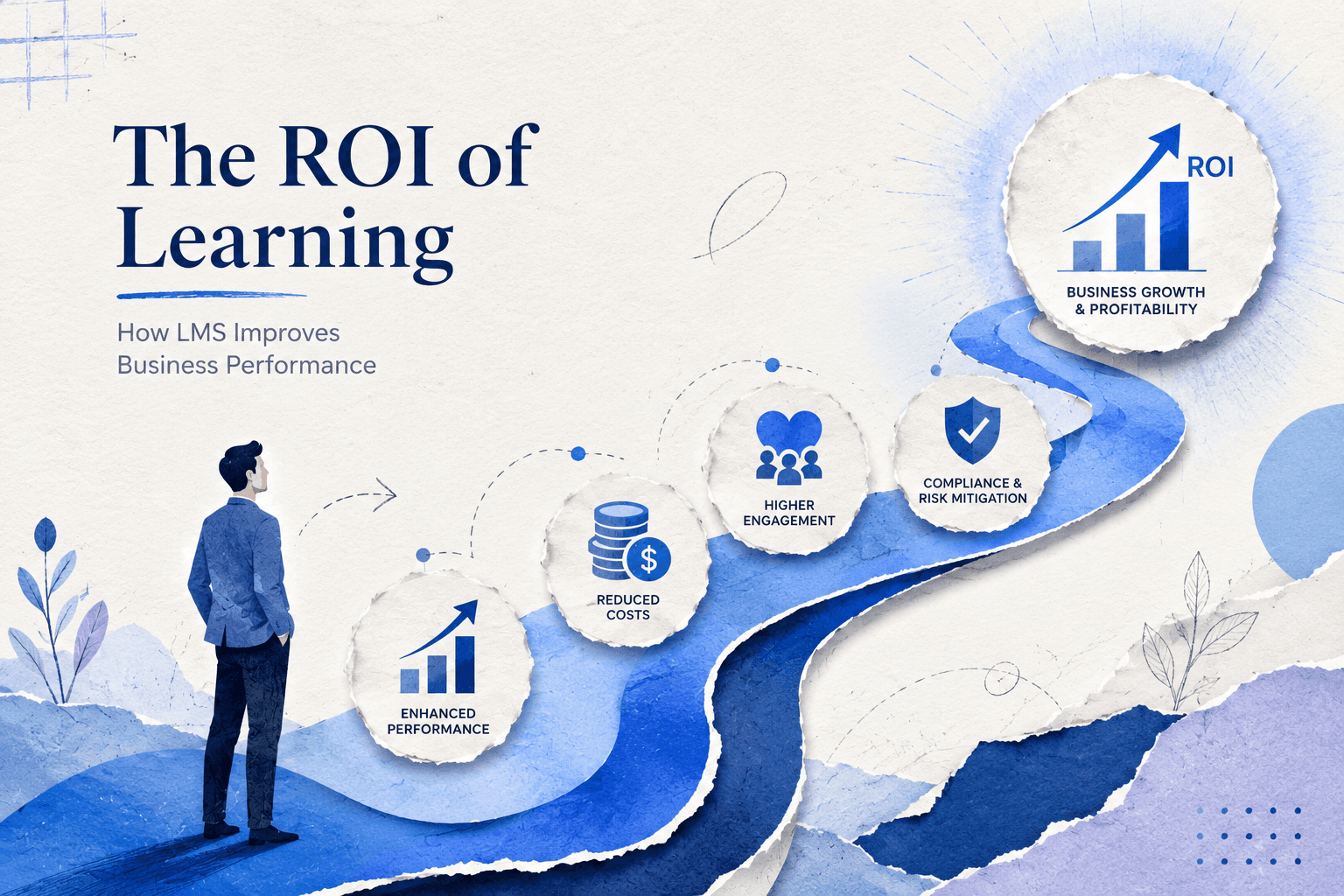
1. Enhanced Employee Performance
One of the primary ways LMS improves business performance is by enhancing employee skills and knowledge. With a centralised platform for training materials, employees can access relevant resources anytime, anywhere.
This accessibility leads to more efficient learning, resulting in better-equipped employees who can perform their tasks more effectively. Improved performance directly translates into higher productivity and better outcomes for the business.
2. Reduced Training Costs
Traditional training methods often involve significant costs associated with venue rentals, travel expenses, and printed materials. LMS eliminates many of these expenses by offering online courses that can be accessed remotely.
Additionally, the ability to reuse and update training materials reduces the need for constant reinvestment in new resources. Over time, these cost savings contribute to a positive ROI for the learning initiatives.
3. Increased Employee Engagement and Retention
Employee engagement is crucial for productivity and retention. LMS platforms provide interactive and engaging learning experiences, including multimedia content, quizzes, and gamified learning modules.
Engaged employees are more likely to retain information and apply it in their roles, leading to improved job satisfaction and reduced turnover rates. By investing in employee development through LMS, companies can foster a culture of continuous learning and retain top talent.
4. Compliance and Risk Mitigation
In industries where regulatory compliance is essential, LMS plays a vital role in ensuring employees receive necessary training and certifications. By centralising compliance training on a digital platform, companies can easily track employee progress and ensure that all requirements are met.
This not only reduces the risk of non-compliance penalties but also enhances operational efficiency by streamlining the training process.
Measuring the ROI of LMS
To accurately measure the ROI of LMS, businesses need to track key performance indicators (KPIs) such as:
Employee performance metrics
Training completion rates
Time-to-competency for new hires
Cost savings from reduced training expenses
Employee engagement and satisfaction scores
Compliance audit results
By analysing these metrics alongside the initial investment in the LMS platform, companies can determine the tangible benefits and ROI of their learning initiatives.
Conclusion
In conclusion, the ROI of learning through LMS extends far beyond just improving employee skills. By enhancing performance, reducing costs, increasing engagement, and mitigating risks, LMS contributes directly to business success and profitability.
As companies continue to prioritise employee development as a strategic investment, leveraging the power of LMS will become increasingly essential in driving long-term growth and competitiveness.
Shihab Alii
Co-Founder & Marketing at Sodium Learn
Shihab leads Marketing, Brand & Growth initiatives. He helps shape the company's positioning, communication, and audience engagement strategies, combining experience in digital marketing, customer experience, and research. With a degree in Biomedical Sciences and Optometry, Shihab brings a unique blend of healthcare, analytical, and people-focused expertise gained through roles across healthcare.
Latest posts
Discover other pieces of writing in our blog